
What didn't and what did the Trump's Tariff do?
Did Trump's tariffs reduce the US trade deficit of goods?
The US trade deficit fluctuated significantly throughout 2025.
On a seasonal year-over-year comparison: the deficit surged in Q1 as businesses adopted a "pre-tariff" purchasing strategy; then, despite the tariffs taking effect in April, the deficit remained consistent with historical levels; until a second wave of large-scale tariffs in August caused the deficit to fall below historical benchmarks.
To better understand these dynamics, let's break down the import and export values separately.
How US Imports Reacted
There are several distinct factors shaped US import trend in 2025:
- Non-Tariff Drivers: Golds (spikes in Jan & Jul); Petroleum (continuous decline due to low crude oil prices in 2025);
- Front-loading (surge in pre-tariff -> back to baseline): Pharma (Q1); Finished metal shapes (Q1); Copper (Apr - Aug);
- Structural Increases: Computers (tariff-exempted) & Telecommunications equipment's strong growth. (It's likely driven by demand for AI infrastructure, as cell-phones which are also tariff-exempted, saw negative YoY.)
Apart from the above, US imports of most Consumer Goods and Automotive declined significantly under tariff pressure.
Conversely, industrial, capital goods, and food categories swere affected to a limited extent.
See the details about US import trends here.
How US Exports Reacted
There are more complicated in the exports side:
- Gold & Pharma: After pre-tariffs surge, US exporters started selling them off mainly in Q4. Gold was mainly sold to Switzerland and the UK; Pharma were mainly sold to Italy and other EU countries.
- Re-Export: We list re-exports separately because it represents the role of the American as a logistics hub, rather than the export of goods by the US.
- Countries where US exports declined: Mainly China, then Canada, Mexico and Singapore.
- Countries where US exports increased: Europe countries, Other ASIA countries, etc.
See the details about US export trends here.
Adding Them Together
Well, Trump's tariffs did increase US fiscal revenue…
Starting in March 2025, US customs duties increased, and have been >$20 billion higher per month since June 2025, compared with the 2023-2024 average for the same month.
It became a primary grouth source of US fiscal receipts.
Altough tariffs only accounts for a small share of the total US fiscal receipts, the threefold increase in collections has made it become a primary source of government's fiscal growth.
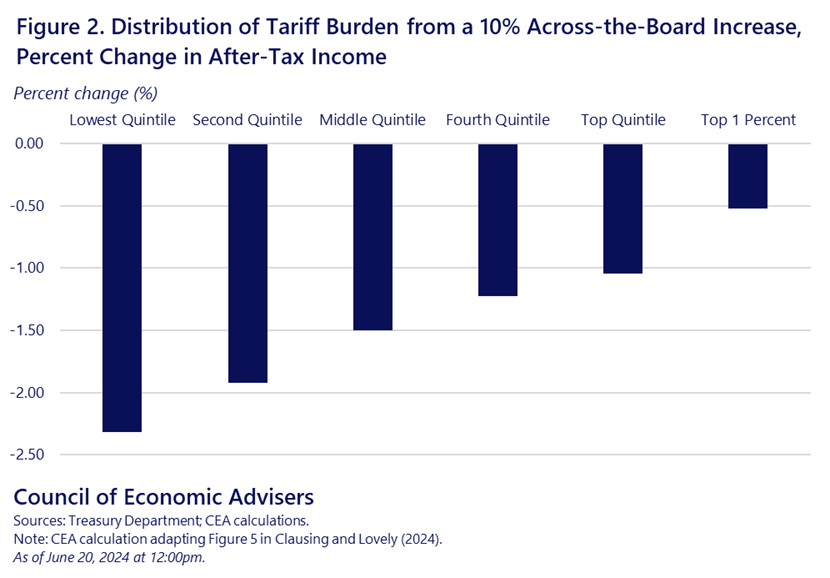
Tariffs function as a regressive tax on US consumers.
Tariffs have led to higher prices for consumer goods, and the way of collecting from US consumers and importers actually functions as a consumption tax. According to a White House study in 2024 , tariffs introduce a new form of regressive tax, further burdening consumers who spend a high proportion of their income on goods.